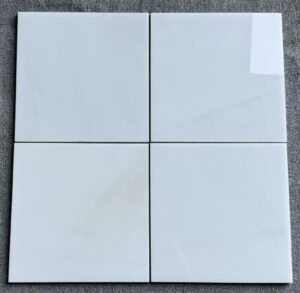
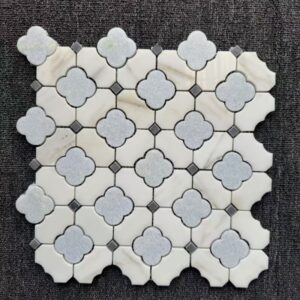
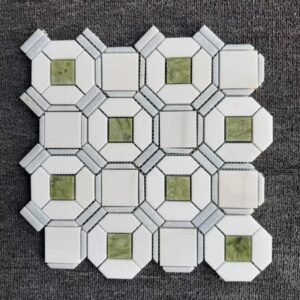
Introduction: The Fusion of Art and Precision in Carrara Waterjet Marble Mosaics
Among all marble types in the architectural sphere, Carrara marble is traditionally associated with the beauty of time, the European arts, and sophistication. Its white-colored background that is veined with delicate gray tones gives it a classic appearance that has decorated historic monuments, modern accommodations, and luxury hotels for centuries.
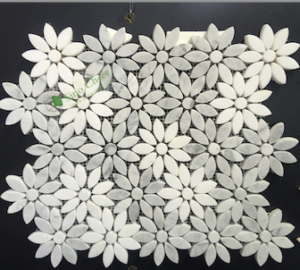
With the increasing popularity of digital technologies that cut marbles, the traditional boundaries of marble craftsmanship have been re-conceptualized. The rise of Carrara Waterjet Cutting Marble Mosaic Tiles is associated with natural beauty and high-end engineering. This innovation facilitates the exploration of geometric patterns, intricate curves, and bespoke forms that were previously impossible to create by hand.
In the international tile market, China has become one of the most significant producers of waterjet marble mosaic products, not only providing efficiency in cost, but also providing advanced waterjet systems, CNC, and professional customization services for consumers of B2B products.
This comprehensive article discusses all of the information you need to know about the Carrara Waterjet Marble Mosaic Tiles manufactured in China- from the origin of the Carrara marble, through the precision of the waterjet cutting method, to the standards of quality, export power, and purchasing behavior that define the industry today.
Understanding Carrara Waterjet Marble Mosaics: Origin and Material Characteristics
-
What Is Carrara Marble?
Carrara marble is a high-quality stone that is primarily derived from the quarries of Carrara, Italy. It's primarily composed of calcite crystals that are formed under high pressure, which results in a fine, compact grain and a translucent surface that reflects light gently.
Typical attributes include:
Base Color: Soft white or light gray
Veining Pattern: Linear or feathery gray patterns
Hardness: Middle (3-4 on the Mohs scale)
Water Absorption: Low to moderate
Texture: Constant and uniform
While the original quarries are located in Tuscany, Italy, the Carrara-style marble used in the modern production of mosaic can come from both Italian and Chinese quarries (such as Guangxi or Sichuan), which share similar chemical composition and striking patterns.
-
Why Carrara Marble Is Ideal for Waterjet Cutting?
The marble's consistent hardness and dense composition make it ideal for waterjet slicing. Unlike softer stones that are easily chipped, Carrara maintains a clean edge and precise configuration when cut under high-pressure water that is mixed with a garnet-type abrasive.
Key benefits include:
Smooth, chip-free surfaces
Constant consistency in repeated configurations
Perfect color coordination between the tiles
compatibility with embedded brass, stainless steel, or glass
This mechanical stability maintains the structural integrity of the most intricate mosaic patterns, such as the arabesque, floral, or wave design.
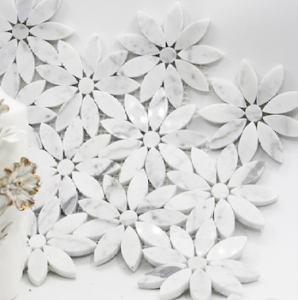
The Art and Technology of Carrara Waterjet Marble Mosaics
-
How Waterjet Cutting Works?
Waterjet slicing is a cold-slicing method that employs a high-pressure jet of water (up to 90,000 psi) that is often combined with small grains of garnet. This method is used to cut through marble with exceptional precision. Unlike other mechanical saws, it doesn't produce heat, which prevents the formation of small cracks or discoloration in natural stone.
The procedure is typically initiated by:
- Digital Design Input (CAD): The mosaic pattern is first created with CAD software.
- The material is loaded: Slabs of Carrara marble are positioned in a secure manner on the cutting surface.
- Precision Cutting: A computer-controlled waterjet head follows a pre-programmed path, this path traverses marble and is sub-millimeter accurate.
- Assembly: The pieces are then cut into smaller pieces and laid onto mesh sheets that have a backing that facilitates the installation of the complete sheet.
-
Advantages of Waterjet Cutting for Carrara Mosaic Tiles
| Aspect | Traditional Saw Cutting | Waterjet Cutting |
| Edge Quality | Rough edges, post-grinding required | Smooth, clean, ready for assembly |
| Design Complexity | Limited to straight cuts | Allows curves, inlays, and intricate shapes |
| Material Waste | High | Low (optimized nesting) |
| Thermal Damage | Possible due to friction | None (cold cutting) |
| Precision Tolerance | ±1–2 mm | ±0.1 mm |
With these advantages, waterjet-cut Carrara mosaics offer the ideal combination of elegance and dimensional precision, enabling both artistic and large-scale commercial applications.
-
Artistic Freedom and Pattern Possibilities
Waterjet cutting has freed designers from physical limitations.
Using the Carrara marble substrate, craftsmen can now create patterns like this:
Arabesque mosaic: Arabic-inspired patterns, such as the flow of water, are common in high-end bathrooms.
Chevron and herringbone: contemporary designs that have a continuous flow direction.
Circular medallions: specific centerpieces that are intended for hotel lobbies or villas.
Combination inlays: combining Calacatta with Nero Marquina, or brass stripes for contrast.
These styles are appropriate for high-end architectural endeavors that combine the traditional beauty of marble with cutting-edge technology.
Types and Styles of Carrara Waterjet Marble Mosaic Tile
The versatility of Carrara Waterjet Cutting Marble Mosaic Tiles is attributed to their diversity. Each design promotes a different architectural style— whether simple, classical, or contemporary.
-
By the Way of Geomechanics
Hexagonal Waterjet Mosaic: Traditional and geometric, appropriate for modern kitchens.
Arabesque and Lantern Patterns: Adorned with felsic ornamentation, these patterns are ideal for decorative walls.
Basketweave and Herringbone: Traditional patterns that focus on the rhythm and movement.
Fish or Fan Scale Forms: They're frequently employed in spas or focal walls.
Diamond or Starburst Inlays: They're employed in high-end commercial design.
2.By Finish Type
| Finish | Description | Application |
| Polished | Glossy, reflective surface | Bathrooms, lobbies, feature walls |
| Honed | Matte, smooth but non-reflective | Flooring, high-traffic areas |
| Tumbled | Soft edges, antique look | Rustic interiors |
| Brushed | Slight texture for grip | Shower floors, outdoor walkways |
Each finish enhances Carrara marble’s natural beauty differently, making it adaptable for both traditional and modern aesthetics.
-
By combining components and materials in different ways
Many Carrara waterjet patterns have other components that are used to contrast with the water:
Carrara + Nero Marquina: Elegance in monochromatic design for dramatic interior design.
Carrara + Brass/ metal: Increases the modern, glamorous nature of the Metallic.
Carrara + Glass: Produces depth and light reflection in popular designs.
This multi-material capability is one of the primary reasons that designers and contractors have a preference for Chinese waterjet mosaic providers, who offer custom combinations of inlays at a competitive price.
The Manufacturing Process in China
China is now a leading producer of waterjet marbled stone; this is not only due to the lower costs of labor, but also because of the rapid development of technology, automation, and international standards of quality (CE, ISO9001, SGS).
-
raw material selection
Reputable Chinese factories typically source premium Carrara blocks that are imported from Italy or other countries like Guangxi White. These blocks are intended to ensure a consistent visual and structural appearance. Every block is subject to:
Visual exam: to eliminate flaws or overveining.
Density testing: making sure each slab has the required cutting strength.
Moisture and absorption assessments: essential for the stability of dimensional properties during waterjet cutting.
-
Waterjet Cutting and Assembly
Once the slabs have been pre-polished, they are moved to CNC waterjet machines. Many of the most advanced Chinese facilities utilize 3 or 5-axis systems that are imported from America or Germany.
Steps include:
Digital Pattern Input
Calibration and Test Cut
High-Pressure Trimming with a Garnet Diet
Inspection of the edge and sorting of the stock.
Mesh Supporting System
Verification of quality by visual and dimensional analysis
Each sheet of mosaic is then individually wrapped using a layer of foam and a wooden crate that is not covered in gas for protection during export.
-
Environmental and Sustainability Practices
Today, modern Chinese marble processors have increasingly incorporated closed-loop water recycling systems that diminish the usage of water by as much as 70%. Dust and slurry from the cutting procedure are removed before release; this procedure is intended to meet the environmental standards required by American and European importers.
Other factories utilize solar-powered systems that dry fabric to reduce the energy expenditure associated with the process—a sign of China's ongoing transition towards environmentally friendly manufacturing.
Quality Control and Precision Standards
-
Accuracy and Flatness Indication
Accuracy is of paramount importance in the production of watermosaics. Tolerances are typically between 0.2 and 0.4 mm. Each sheet is evaluated for:
All-versus-all comparison
Uniformity of joint (1.5-2.0 mm typical)
Deviation of the flatness of less than 0.5 mm per square meter.
Quality control technicians assess the sheets' quality visually and mechanically before assembling, ensuring the consistency of large projects that use the sheets.
-
Inspection of the surface and color coordination
Since Carrara marble is a pre-certified material, color diversity is unavoidable. Professional factories take this approach by doing random sorting:
Associating slabs by tone and the intensity of their veining.
Utilizing digital imaging technology to consistently achieve aesthetic composition.
Employing the epoxy resin as the matrix material if the slabs have micro-fissures.
This guarantees that all of the mosaic sheets in one area are consistent in tone and texture.
-
Packaging and Marketing Practices
For clients that are B2B in nature, packaging has a significant role in decreasing the likelihood of breakage. Common export packaging involves:
Bubbly layer between the sheets.
Bundles that shrink-wrap
Plywood crates that are reinforced with plastic (without smoking)
The encoding of barcodes in batch and color codes
Also, factories follow the ASTM C97/C170 testing regimen for strength and absorption, and provide inspection reports or SGS certifications on request.
Comparing Chinese Manufacturers vs. Italian Brands
The worldwide marble mosaic market is primarily derived from Italian craftsmanship. However, the Chinese marble industry has experienced significant advances in both technical prowess and aesthetic beauty over the past decade. Understanding the discrepancies between Chinese producers and Italian brands is important for international consumers who want to maintain quality, price, and capacity.
-
Design and Engineering Abilities
Italian manufacturers like Sicis or Bisazza have a focus on producing beautifully designed products and small batch craftsmanship, which often involves producing limited edition collections. Contrastingly, Chinese factories specialize in large volume production of OEM and ODM products; they provide a variety of customization options based on the client's drawings, patterns, and color combinations.
While Italy continues to be a leader in design, the integration of CAD-CAM systems, 3D models, and digital nesting has reduced the gap between design and reality significantly. Modern Chinese facilities now utilize design teams that are trained in the European style of architecture and have a forecasting function that ensures the style of architecture is in line with the global demands of consumers.
-
Material and Equipment Comparison
| Aspect | Italian Production | Chinese Production |
| Raw Material Source | Primarily local Carrara and Calacatta quarries | Imported & domestic Carrara-style marble |
| Cutting Equipment | Precision European CNC and waterjet systems | 3–5-axis CNC systems, often imported |
| Quality Control | Strict, manual inspection per sheet | Automated + manual dual QC |
| Price Level | High (premium segment) | 30–60% lower, B2B competitive |
| Customization Capability | Moderate (standardized design) | Very high (OEM/ODM flexibility) |
The combination of technological innovations and high volume efficiency has led to China becoming the center of gravity for affordable, yet remarkable, Carrara Waterjet Cutting Marble Mosaic Tiles.
-
Supply Chain and Logistics Benefits
Another significant benefit of sourcing from China is its integrated supply chain. Stone quarries, waterjet plants, packaging facilities, and export logistics services are all located in clusters of industrial importance like the Foshan, Xiamen, and Yunfu areas.
This system facilitates the production of:
Provide for a quicker response time (typically 2-4 weeks).
Offer door-to-door transport via FOB/CIF.
Combine multiple materials in one sequence (Carrara, Calacatta, Nero Marquina).
Conversely, European suppliers have a longer production cycle and higher costs of freight, particularly for large projects that are architectural.
Applications in Luxury Interiors
-
Residential Developments
In high-end residences, Carrara Waterjet Cutting Marble Tiles are commonly employed for:
Bathroom walls and floors: creating a serene, spa-like environment.
Kitchen backsplashes: combining metal with marital design for a modern appearance.
Fireplace surrounds: the emphasis is on the texture and visual composition.
The white tones of Carrara are easily combined with stainless steel, brass, and natural wood; this material is therefore considered one of the most versatile components for interior design.
-
Business and Hospitality Ideas
Luxury hotels, spas, and retail spaces have increasingly adopted waterjet cut mosaics as a wall feature, grand entrances, and custom decorations. Noteworthy uses include:
Hotel reception floor: utilizing Carrara's decorative effects and brass waterjet attributes to create focal points.
Spa interior: soft, curving patterns that imitate the natural flow of water.
Retail stores: specific patterns that represent the luxury brand's identity.
For those involved in commercial design, the consistency and precision of Chinese waterjet marbles cause projects to have a consistent effect across multiple locations or brands.
-
Public and Outdoor Spaces
Even though Carrara marble is traditionally utilized in the interior of homes, honed or brushed versions with appropriate seals can be employed to:
Exposed facade
Courtyard floorings
Mosaics in the fountain or garden.
Waterjet technology enables the production of anti-slip patterns on surfaces; this technology is expanded on the design of Carrara's functionality in exterior design contexts.
Maintenance and Longevity Tips
-
Sealing and Protection of the surface
Carrara marble is naturally porous and should be sealed before and after installation. Professional-quality penetrating sealers are recommended to prevent the absorption of water, staining, and etching from acidic substances.
Re-sealing should occur approximately every 12-18 months, depending on traffic and cleaning frequency.
-
Cleaning and Taking Care
Routine maintenance involves:
Cleaning with pH-neutral stone cleaners alone.
Avoid unconventional cleaning agents like vinegar, lemon, or harsh detergents.
Use soft microfiber towels instead of harsh pads.
Spills should be cleaned immediately, especially from substances like wine, coffee, or oil that are colorful. For tough stains, a poultice composed of baking soda and water can remove impurities without negatively impacting the marble's surface.
-
Re-polishing and Restoration
One of Carrara's benefits is its surface, which is renewable. If the mosaic is lost in luster due to wear, it can be restuffed using diamond tools or professionally finished without replacing it. This capacity extends its lifespan and retains the original, beautiful design for decades.
Global Market Insights and Export Advantages
-
Increasing demand for Marble Mosaics
The worldwide marble mosaic tile market is predicted to increase at a rate of over 5.8 percent CAGR over the course of the next decade, primarily due to the increasing number of residential projects and superior commercial endeavors.
Carrara marble continues to be one of the most popular stones in the high-end design field due to its neutral coloration and architectural flexibility.
-
The competitiveness of China’s exports.
China is currently responsible for over 60% of the world's decorative marbles, the majority of which are exported to:
The U.S.
Canada
Australia
The United Kingdom
The Middle East
Competitive advantages include:
Costly raw material procurement
Increasing the capacity for scalability
Exigent international enforcement (SGS, ISO, CE)
Expandable logistics networks via ports like Xiamen and Shenzhen.
This facilitates the efficient coordination of global clients for the consistent delivery of high-quality products.
-
Business Relationships and Marketing
Professional vendors offer the following services for efficient customs clearance:
Origin's Certificate (OC)
SGS or BV Inspection Reports
Exempt from fumigation- Free Crates for export.
Ce and ISO Certificates
Buyers are urged to collaborate with factories that promote transparency in their documentation. This will ensure that regulations regarding importation are followed and the product is delivered smoothly.
Buying Guide and Quality Inspection Tips
For those who import from China, contractors, or design studios, it's important to verify the quality. Here is a systematic approach:
-
Pre-Purchase Review
Before initiating the order:
- Ask for samples of the requested material and verify the surface quality in daylight.
- Examine the waterjet's precision in terms of magnification—the borders should be sharp and free of chips.
- Check the mesh's adherence to the mesh; the backing should not easily peel.
-
On-site or third-party monitoring
Buyers can allow third parties like SGS or Intertek to audit the quality of the product on site. Inspection typically involves:
The check for randomness in samples with a specific dimension
Visual assessment of the crack, chip, or tonal variation.
Verifying the packaging for export safety.
-
Shipping and After-Sales Support
Top-level suppliers provide:
Policy regarding the replacement of damaged tiles during delivery.
Complete installation instructions
Technical assistance in the selection of adhesive and grout.
Establishing formal rules about who is responsible for what ensures the long-term reliability of the supplier.
Conclusion: The Future of Carrara Waterjet Marble Mosaic in Global Design
The evolution of China-made Carrara Waterjet Marble Mosaic Tiles represents the ideal combination of natural stone artistry and precise craftsmanship. Once subordinate to the European craftsman, the marble mosaic industry now enjoys technological advances that are global in scope. These advances are made by Chinese manufacturers and have unparalleled efficiency, customization, and sustainability.
Today, Carrara patterns are no longer limited to traditional white and gray design aesthetics. Waterjet technology has provided a new form of design freedom: every pattern, slope, and texture is now capable of being designed on.
For developers, builders, and importers, selecting a dependable Chinese waterjet marital supplier is predicated on having access to:
- Constantly high-quality Carrara soil
- Innovative waterjet cutting technology
- ODM and OEM services that are flexible
- Pricing strategies that are competitive for international markets.
As the concept of sustainability and precision continues to be important in the future of building materials, Carrara Waterjet Cutting Marble Mosaic Tiles will still be considered a paramount example of both beauty and engineering. These tiles will represent the harmony between natural beauty and technological mastery.