The production process of stone mosaics by Sino Cheer can be summarized in five main steps:
Selection and cutting of stone, cutting and beveling, grinding and polishing, tiling and assembling, as well as quality inspection and packaging These five steps all require fine craftsmanship and professional technology. Each step is crucial and indispensable!

Natural Stone Mosaic Feature Wall Project by Sino Cheer
The first step: selecting and cutting stone is the first important step in producing stone mosaic. At this stage, professional craftsmen will select stones of high quality, color and texture from a large number of stones and then cut these stones into appropriate sizes and shapes. Cutting the stone requires precise control and skill to ensure that each mosaic piece is consistent in size and shape for a perfect fit.
The second step is to introduce and sharpen the angle. At this stage, craftsmen use specialized tools to cut the stone into various shapes, such as squares, strips, circles, etc., while grinding away the edges and corners to make them smoother. This step is also very important, because only by cutting the stone into the appropriate shape and size can the mosaic pieces be more perfect when assembled.
The third step is grinding and polishing. At this stage, craftsmen finely grind and polish the stone to give it a mirror-smooth surface while maintaining the natural texture of the stone. This step requires the use of special tools and techniques to ensure that the surface of the mosaic pieces is smooth, flat, and free of flaws and unevenness.
The fourth link is collage and combination. During this stage, craftsmen combine stone mosaic pieces of various shapes and colors to form a complete pattern or image. This step requires precise calculation and control to ensure that each mosaic piece fits together perfectly to form a perfect whole.
The fifth link is quality inspection and packaging. At this stage, craftsmen will carefully check the quality of the finished mosaic to ensure that the color, shape, and size of each mosaic block are consistent and that they fit together more perfectly. If the quality is acceptable, it is packaged and ready for delivery. Packaging is also a very important link, because only exquisite packaging can increase the added value of the product and meet the needs of high-end customers.

What are Sino Cheer's stone mosaic standards?
Most non-professional purchasers are unable to review stone mosaics of different materials from high-quality mosaic stone manufacturers. So what kind of products are high-quality stone mosaics? First of all, high-quality stone mosaics should use high-quality stone as the raw material. Only high-quality stone can guarantee its durability and beauty. Secondly, high-quality stone mosaics should have fine craftsmanship and professional technology. Only fine craftsmanship and professional technology can ensure that the color, shape, and size of each mosaic block are consistent and the splicing is more perfect. In addition, high-quality stone mosaics should have the characteristics of a smooth surface, rich colors, environmental protection, and safety. Only with these characteristics can we meet the needs of different customers and increase the added value of our products.
So what characteristics should high-end stone mosaic products have? It is also a product feature of Sino Cheer!
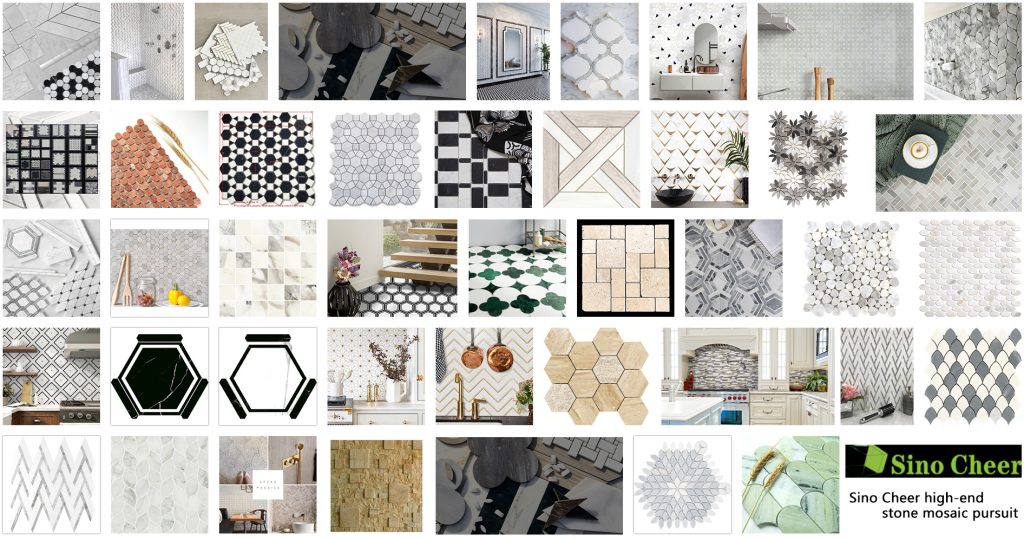
high-end stone mosaic products | Sino Cheer
In addition to the above-mentioned characteristics of high-quality stone mosaics, high-end stone mosaic products should also have unique design styles and high-end packaging. The unique design style can increase the added value of the product and make it more artistic and collectible. High-end packaging can improve the grade and quality of the product, making the product more exquisite and high-end. In addition, high-end stone mosaic products should also pay attention to detailed processing and overall coordination. The handling of details can reflect the quality and sophistication of the product, and the overall coordination can reflect the style and characteristics of the product.
Sino Cheer stone mosaic: the production process of stone mosaic requires fine craftsmanship and professional technology, and every step is crucial. High-quality stone mosaics should use high-quality stone, have fine craftsmanship and professional technology, a smooth surface, rich colors, environmental protection, and safety. In addition to the above characteristics, high-end stone mosaic products should also focus on unique design styles and high-end packaging, which can increase the added value and quality of the product while increasing the artistic value and collection value of the product, but these are far from enough. Next, let’s learn more about stone mosaic (Sino Cheer).
stone mosaic: Source of raw materials
Stone mosaic is a decorative tile cut from natural marble material. Its origins can be traced back to ancient Greek and Roman times, but in modern times, it has become an art form widely used in interior and exterior decoration.
Natural marble is a rock formed from limestone under high temperature and pressure with a unique texture and color. This material comes from all over the world, but mainly from China, Turkey, Spain, Italy, Greece, Brazil, and other countries.
During the production process, natural marble is cut into blocks, slabs, or tiles to make the most of the material. These cut stone blocks or slabs are transported to factories for further handling and processing. There, craftsmen cut the stone into mosaic blocks of various shapes and sizes according to the customer's needs and finely grind and polish them.
As a brand specializing in stone mosaics, Sino Cheer always adheres to the concept of innovation and quality first. Sino Cheer's team is composed of a group of craftsmen and designers who love stone art. They are committed to combining the highest quality stone with the most exquisite craftsmanship to provide customers with unique works of art.
Sino Cheer's products cover various styles and types of stone mosaics, including classical, modern, simple, luxurious, etc. Their team of designers can carry out customized design and production according to customer needs, ensuring that each product can meet the customer's unique requirements.
In addition to high-quality products, Sino Cheer also focuses on providing customers with excellent after-sales service. They provide customers with free installation guidance and technical support to ensure that customers can complete the installation and use of stone mosaics safely and smoothly. At the same time, they also provide services such as repair, maintenance, and replacement of damaged parts to ensure that customers' stone mosaics can remain in good condition for a long time.
Sino Cheer's brand has a good reputation and has been recognized by customers and the industry. Their product quality is reliable, their service is excellent, and they have received unanimous praise from customers. At the same time, they also actively participate in various industry activities and exhibitions, communicate and cooperate with the industry, and promote the development of the stone mosaic industry.
In terms of sustainability and environmental protection, Sino Cheer has always maintained a high level of attention. They choose environmentally friendly and sustainable stone materials and adopt advanced production processes and technologies to reduce their impact on the environment. In addition, they also actively promote the concept of recycling and reuse, encouraging customers to recycle and reuse when replacing stone mosaics to reduce waste and environmental pollution.
As a brand focusing on stone mosaics, Sino Cheer takes high-quality products, excellent services, a good brand reputation, and environmental sustainability as its core competitiveness. They are committed to providing customers with the most perfect stone mosaic solutions to make their spaces more beautiful and noble.
Some key factors for Sino Cheer to choose stone raw materials:
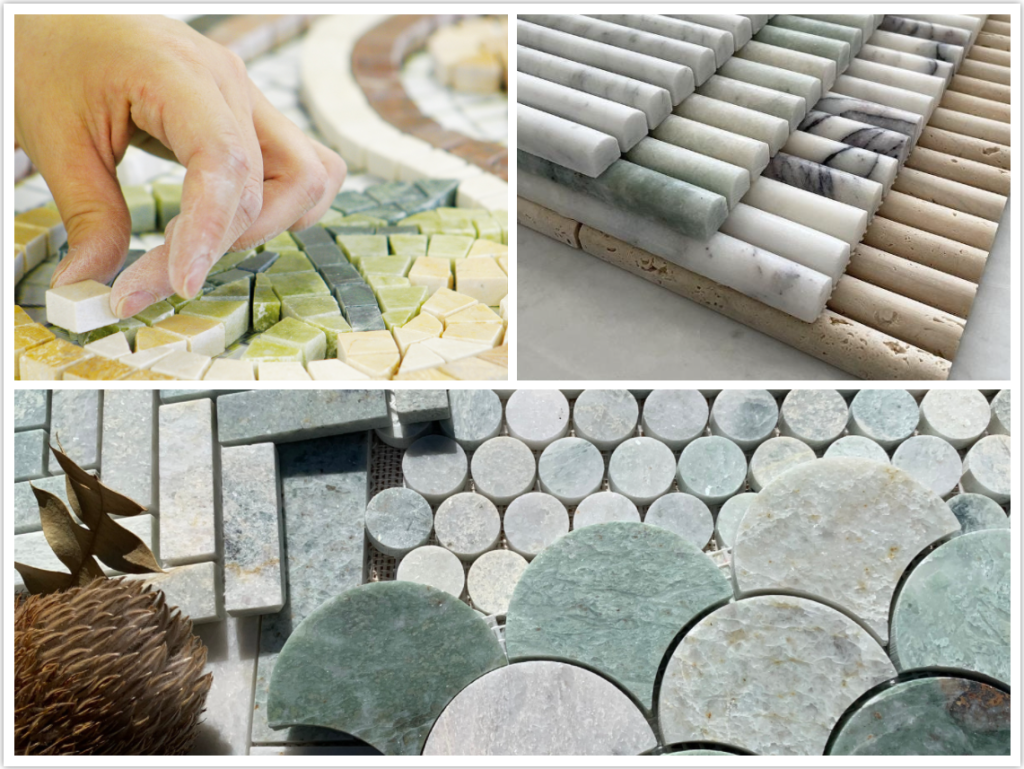
Some key factors for Sino Cheer to choose stone
Cleanliness: Cleanliness is one of the important factors in choosing stone raw materials. High-quality stone raw materials should have high cleanliness, and the surface should be free of impurities, stains, and other defects. Sino Cheer will strictly check the surface cleanliness when selecting raw materials to ensure that the materials have a smooth and clean surface.
Color consistency: Color consistency is one of the important indicators for judging the quality of stone. Sino Cheer pays attention to the uniformity and consistency of color when selecting raw materials to ensure that the produced stone mosaics achieve the best effect in color.
Hardness: The hardness of stone is a key factor in determining its durability and service life. Sino Cheer will test the hardness of raw materials when selecting them to ensure that the materials used have high hardness and wear resistance to meet customer requirements for long-term use.
Natural texture: texture is one of the important characteristics of stone and a key factor affecting its aesthetics. Sino Cheer pays special attention to the naturalness and smoothness of the texture when selecting raw materials to ensure that the produced stone mosaics have a stronger artistic and natural feel in appearance.
No cracks: Cracks are one of the common defects in stone that affect its integrity and longevity. Sino Cheer will carefully check whether there are cracks when selecting raw materials and will use advanced testing equipment to further test the materials to ensure that the materials used are crack-free.
No Dirty Dents: Dirty dents refer to potholes and uneven areas on the surface of the stone, which will affect its aesthetics and use. Sino Cheer pays attention to surface smoothness and the absence of dirty dents when selecting raw materials to ensure that the produced stone mosaics have a better appearance during use.
Background consistency: Background consistency refers to the consistency of stone surface color, texture, gloss, and other characteristics and is one of the important indicators for judging stone quality. Sino Cheer pays attention to background consistency when selecting raw materials to ensure that the produced stone mosaics are more coordinated and unified in overall effect.
Mine Sources: Sino Cheer only selects raw materials from mines that are certified sustainable and environmentally friendly. Sino Cheer works with selected and reputable suppliers to ensure that the stone raw materials used come from reliable mines and meet environmental protection and sustainability standards.
Quality Assurance: Sino Cheer attaches great importance to the quality assurance of raw materials. Establish good cooperative relationships with suppliers and adopt strict inspection procedures to ensure the quality and reliability of raw materials. During the procurement process, strict testing and inspection are conducted to ensure that the materials used meet the quality standards for the market.
Supply Chain Transparency: Sino Cheer is committed to achieving supply chain transparency and traceability. Sino Cheer establishes a transparent supply chain with its suppliers to ensure that the source and reliability of raw materials are known and meet sustainability requirements. By maintaining transparency in the supply chain, the quality and sustainability of raw materials can be better controlled.
Sino Cheer also pays attention to the sustainability and environmental protection of raw materials. Sino Cheer selects raw materials from certified sustainable and environmentally friendly mines and uses environmentally friendly processing techniques and technologies to reduce environmental impact. Moreover, Sino Cheer focuses on the recyclability and reusability of materials to reduce waste and environmental pollution. During the production process, Sino Cheer takes the lead in taking measures to reduce energy consumption and emissions to achieve a more environmentally friendly production method.
When selecting raw stone materials, Sino Cheer focuses on key factors such as cleanliness, color consistency, hardness, natural texture, no cracks, no dirty dents, and a consistent background. It also pays attention to mine origin, quality assurance, supply chain transparency, sustainability, environmental protection, and other important factors. The strict control of these factors enables Sino Cheer to always produce high-quality, high-demand stone mosaic products to meet customers' different needs for decorative arts. We are always committed to actively promoting the Sino Cheer product concept for the sustainable development and innovation of the stone industry and contributing to the creation of a more beautiful and high-quality space environment.
Not only the leftover materials
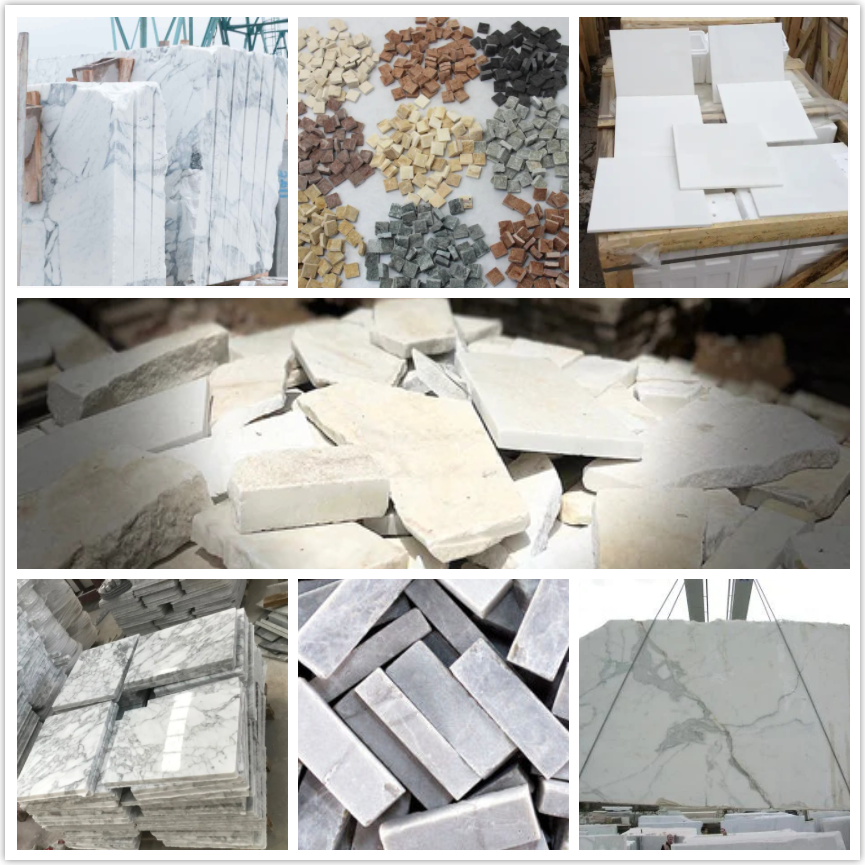
stone mosaic: Source of raw materials
After 21 years of changes in the stone mosaic market, Sino Cheer Company understands that selecting high-quality raw materials is the cornerstone of making high-quality stone mosaics. In order to ensure consistent color and natural texture, even if the remaining materials of large slabs or ceramic tiles are used, they will go through a specialized quality inspection department to carefully select raw materials with uniform color, beautiful texture, and no defects. These raw materials come from certified sustainable and environmentally friendly mines, ensuring their quality and environmental friendliness.
Sino Cheer makes its products from blocks or small pieces of material. Sino Cheer believes that using whole pieces of raw materials can better ensure color consistency and natural texture. During the procurement process, materials are carefully screened to ensure that their color, hardness, durability, and other indicators meet company standards. By using blocks or small pieces of material, Sino Cheer is able to better control the quality and appearance of its mosaic products.
In addition, Sino Cheer Company cuts and processes raw materials by hand to obtain precise sizes and shapes. Sino Cheer finely sands and polishes each mosaic piece to ensure it fits together perfectly. Hand cutting and processing not only ensures the precise size of each mosaic block but also gives each mosaic block its own unique personality and artistic value. In terms of quality control, Sino Cheer Company implements strict quality control procedures. Sino Cheer undergoes rigorous inspection and testing of raw materials to ensure they meet quality and performance requirements. During the production process, Sino Cheer conducts quality inspections on every process, from initial cutting to final installation, to ensure that every product meets the company and customer requirements.
Sino Cheer Company not only pays attention to the quality and environmental protection of raw materials but also to the sustainability and environmental protection of products. Sino Cheer has always been determined to reduce its impact on the environment. At the same time, Sino Cheer also actively promotes the concept of recycling and reuse, encouraging customers to recycle, reuse, or develop secondary products when replacing stone mosaics to reduce waste and environmental pollution.
Sino Cheer's love for mosaics stone and pursuit of product quality stem from its deep affection and professionalism in the stone industry. Sino Cheer understands that stone mosaic is a unique art form that requires exquisite skills and fine craftsmanship to produce high-quality products. Therefore, we always adhere to the attitude of excellence and constantly pursue excellence and innovation.
Sino Cheer pays attention to the selection of raw materials, the use of blocks or small pieces of material, hand cutting and processing, strict quality control, sustainability, and environmental protection when making stone mosaics. These characteristics enable Sino Cheer to produce high-quality, high-demand stone mosaic products to meet customers' different needs for decorative arts. Next, Sino Cheer will actively promote the sustainable development and innovation of the stone industry and contribute to creating a more beautiful and high-quality space environment.
perfect usage of stone
Cutting from blocks to slabs,strip tiles, and small-sized tiles,the left-over and small blocks are perfect to make tiles and mosaics due to the small size of the mosaics needed; there is no need for large slabs or tiles. This way, you can make full use of the materials.
At Sino Cheer, we have a unique understanding and practice of the perfect use of stone. From block cuts to large slabs and strip tiles to smaller-format tiles, we value every stone and strive to realize its full potential.
As an ancient and beautiful art form, mosaics usually require smaller sizes. This provides us with the opportunity to make the most of the material left over from cutting the large pieces of stone. These leftover materials, although smaller in size, have the same texture, color and grain as the bulk material, making them ideal for use in making tiles and mosaics.
On Sino Cheer's production line, you won't see large-sized boards or tiles abandoned or wasted. Instead, every piece of material is treated as a valuable resource. We have an experienced team that is well versed in how to skillfully transform these small pieces of material into brilliant and colorful mosaics.
Our designers and craftsmen use exquisite skills and endless creativity to splice and combine these small pieces of stone to create a unique mosaic design. Each mosaic embodies our hard work and wisdom and reflects our love for stone and our pursuit of beauty.
This method of making full use of materials not only reduces waste and production costs, but also gives our mosaic products a unique charm. Because each piece of mosaic may come from different large slabs or tiles, they may carry different textures and colors. This makes each of our mosaic products unique and makes the decorative effect of the space more colorful. We also focus on the sustainability of this approach. We know that as a responsible company, we have the responsibility and obligation to protect our planet. By making full use of every stone, we are actually reducing the exploitation of natural resources, reducing energy consumption and emissions during the production process, and doing our part to protect the environment.
1. Durability and stability: Builders and designers will consider its durability and stability when choosing mosaics stone. Stone mosaics need to be able to withstand the test of time, maintaining the stability of their color, shape, and texture. The raw stone materials used by Sino Cheer have been strictly screened and inspected, and are highly durable and stable.
2. Quality and workmanship: Quality and workmanship are important points that builders and designers pay great attention to. Sino Cheer has experienced designers and craftsmen who are proficient in various stone processing techniques and are able to produce high-quality, exquisitely crafted stone mosaic products.
3. Environmental protection and sustainability: Modern builders and designers pay great attention to environmental protection and sustainability. The stone raw materials used by Sino Cheer come from certified sustainable and environmentally friendly mines. At the same time, they also focus on using environmentally friendly processing techniques and technologies to reduce the impact on the environment.
4. Innovation and design: Builders and designers will consider innovation and design when choosing stone mosaics. Sino Cheer's design team constantly introduces new design concepts and ideas to fully demonstrate the unique charm and personality of stone mosaics.
5. Price and cost-effectiveness: Price and cost-effectiveness are also factors that builders and designers need to consider. Although the price of high-quality stone mosaics is relatively high, in the long run, their stability and durability are also higher, so the price-performance ratio is more reasonable. While ensuring product quality, Sino Cheer also strives to provide customers with reasonable prices.
Sino Cheer's stone mosaic is not only a decorative material but also a reflection of our perfect use of stone and our pursuit of beauty. We cherish every stone and transform them into colorful mosaic works through exquisite skills and creativity, adding unique charm and personality to every space.
Less is More
Making a mosaic is a very challenging task in terms of material selection. Although there are many materials that can be used in the creation of mosaics, not all are suitable for this process. There are several key factors to consider when choosing the most suitable material, including the material's color, durability, moldability, and cost.
1. Color is the primary consideration when choosing mosaic materials. To ensure the color combination and appearance of your mosaic piece are appealing, we often choose materials with bright colors and contrast. These materials can highlight the details and design of the mosaic, adding vibrancy and appeal to the piece.
2. Durability is an important consideration when choosing mosaic materials. Because mosaic pieces are often used for decoration and accents, they can be exposed to a variety of environmental conditions. Therefore, we choose materials that are highly durable and resistant to corrosion to ensure that the work will remain in its original condition for a long time.
3. Plasticity is an important consideration when choosing mosaic materials. Mosaic works require cutting, polishing, and splicing processes, so we need to choose materials that are easy to process and shape. This helps us realize designers’ ideas and transform them into real-life works.
4. Cost is also an important consideration when choosing mosaic materials. Because mosaic materials vary in type and quality, so do their prices. On the premise of meeting the above-mentioned color, durability, and plasticity, we also need to consider the cost-effectiveness of the materials to ensure that our mosaic works are reasonably priced.
a. Texture and texture of materials: The texture and texture of materials can affect the appearance and feel of the mosaic work. When selecting materials, we need to pay attention to whether their surface texture can be coordinated with the overall design style and whether their texture can add texture and ornamental value to the work.
b. The size and shape of the material: The size and shape of the material are also factors that need to be considered when selecting mosaic materials. Materials of different sizes and shapes can be used in different mosaic designs; for example, larger tiles can be used to cover larger spaces, while smaller, differently shaped materials can be used to add detail and a decorative effect.
c. Transparency and gloss of the material: The transparency and gloss of the material can also affect the visual effect of the mosaic work. Transparent materials can increase the light transmittance and brightness of the work, while glossy materials can enhance the reflective effect and three-dimensional effect of the work.
d. Safety of materials: When choosing mosaic materials, we also need to consider their safety. Some materials may have problems with radioactivity or toxic substances, so when selecting materials, we need to understand their composition and safety to ensure that they will not cause harm to users or the environment.
e. Recyclability of materials: In order to meet the requirements of environmental protection and sustainable development, we also need to consider the recyclability of materials. Choosing recyclable materials can reduce waste generation and environmental pollution while also reducing costs and improving resource utilization efficiency.
Although we can choose from a variety of materials to make mosaics, we usually choose a few that are most suitable to ensure that the color of the work is beautiful, durable, malleable, and cost-effective. By carefully selecting materials, we can create stunning mosaic pieces that add a unique decorative effect to a space.
Perfect Collocation
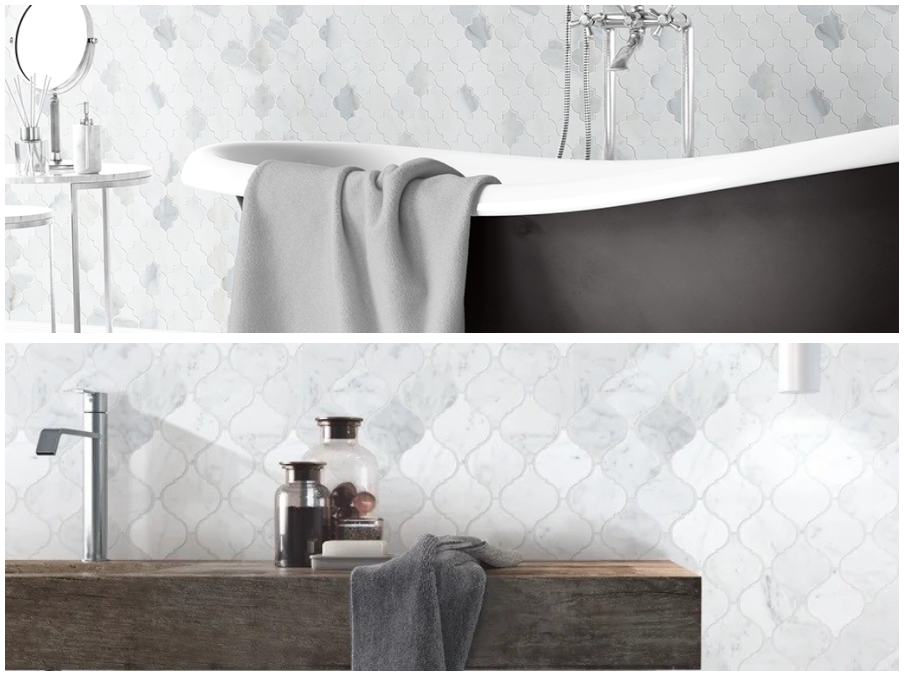
marble mosaics, Perfect placement
Natural marble is a high-end decorative material. Its unique texture, color, and texture are deeply loved by designers and owners. In decorative design, natural marble is often used on floors, walls, tabletops, sculptures, and other occasions to show its noble and elegant temperament and unique artistic charm. In addition to natural marble, many other materials can also be perfectly combined with it to create a more colorful decorative effect. Among them, mother-of-pearl is a very precious material. Its soft luster and unique texture can complement natural marble. The combination of mother-of-pearl and natural marble can create a warm, noble, and elegant decorative style, which is very suitable for high-end hotels, clubs, villas, and other places.
Metal materials such as stainless steel, aluminum, and copper can also be perfectly combined with natural marble. These metal materials have the advantages of modernity, easy processing, and corrosion resistance. They can create a strong contrast with natural marble, creating a stylish and modern decorative style. For example, metal materials such as stainless steel or aluminum can be combined with natural marble to create unique tabletops or sculptures; metal materials such as copper can also be combined with natural marble to create unique lamps or decorations. When different materials are combined together, attention needs to be paid to the coordination and overall effect of the materials. Designers need to make clever designs and combinations based on the texture, color and characteristics of different materials, as well as specific occasions and needs. For example, when combining mother-of-pearl with natural marble, you need to pay attention to the coordination of textures and colors; when combining metal materials with natural marble, you need to pay attention to the balance of modernity and tradition.
1. Glass matching: Glass mosaic is a material with high transparency. Its color is bright and its texture is unique, which can contrast with natural marble. Combining glass mosaic and natural marble can create a modern and simple decorative style, suitable for desktops, cabinet doors, partitions, and other occasions.
2. Wood matching: Wooden mosaic is a natural and warm decorative material with unique texture and warm color, which can contrast with natural marble. Combining wooden mosaic and natural marble can create a unique decorative effect, suitable for floors, walls, bars and other occasions.
3. Crystal matching: The crystal clearness and sparkle of crystal can complement natural marble to create a noble and elegant decorative style. Combining crystal and natural marble can create unique decorative effects such as chandeliers, ornaments, or sculptures.
4. Ceramic mosaic: Ceramic mosaic is a common decorative material with rich colors, fine texture and good durability, and can be combined with natural marble. Combining ceramic mosaic and natural marble can create a unique decorative effect, suitable for floors, walls, pools and other occasions.
5. Metal matching: Metal mosaic has the advantages of modernity, easy processing, corrosion resistance, etc., and can be perfectly combined with natural marble. Combining metal mosaic and natural marble can create a fashionable and modern decorative style, suitable for walls, sculptures, ornaments, and other occasions.
Natural marble can be perfectly combined with many other materials to create a more colorful decorative effect. Among them, mother-of-pearl, stainless steel, aluminum, copper and other metal materials are one of the materials that are very suitable for combination with natural marble. Designers need to cleverly design and match according to specific occasions and create the perfect decorative effect.
Production craftwork
We pay attention to every production link, pursue excellent quality and exquisite craftsmanship, and provide customers with the highest quality products and services.
Production procedures

Part of the material production and processing process of Sino Cheer stone mosaic
1. Cutting from block or strip tiles
Before we officially start the production process, we first cut the tiles from the original blocks or strips. This step ensures that we get the desired shape and size ready for subsequent production steps.
2. Ceramic tiles are divided into specified thicknesses
After cutting, we further process the tiles to the specified thickness, usually 10mm, 8mm and 7mm. This step ensures that all tiles remain uniform in thickness, making subsequent splicing and laying easier.
3. Polish or polish ceramic tiles
After the thickness adjustment is completed, we polish or sand it. This step is intended to improve the gloss and smoothness of the tile, making it more attractive to the eyes. Through advanced polishing and polishing technology, we ensure that each tile achieves the best gloss effect.
4. Cut into pieces
After polishing or honing, we further cut the tiles into smaller pieces depending on the design requirements. These pieces will be used to assemble the mosaic pattern, ensuring that each mosaic perfectly represents the details of the design.
5. Assemble the chip
Next comes the stage of assembling the chip. We will carefully assemble the cut tile fragments according to the design requirements to form various mosaic patterns. This stage requires a high degree of focus and accuracy to ensure a perfect presentation of the final product.
6. Bonding sheets
Once the chips are assembled, we use a special adhesive to secure the mosaic chips to the sheet. This step ensures that the mosaic chips remain stable during transportation and use and do not fall off or shift.
7. Packaging
Finally, we will carry out careful packaging work. Using specialized packaging materials, we ensure that mosaic products are fully protected from damage and wear during transportation. After packaging is completed, the product will be shipped according to the customer's requirements to ensure on-time delivery.
This is the complete production process of Sino Cheer's stone mosaic.
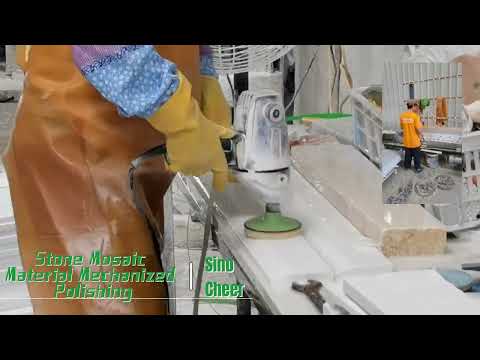
How to Make a Stone Mosaic: Sino Cheer Mosaic Stone is a challenging art that combines creativity and technology. Drawing inspiration from the old saying 'A good horse deserves a good saddle,' we will examine the complex process of turning raw materials into a captivating mosaic in this comprehensive tutorial.
1. Fundamentals: Material and Method Matching
The selection of material in the realm of stone mosaic is analogous to selecting the appropriate saddle for your horse. Diverse materials necessitate diverse production procedures, just as a good horse necessitates a good saddle. Let's look at how material selection affects the manufacturing process.
1.1 The Characteristics of Material Selection
It is vital to understand the specific features of each material. Each stone variety, from marble to granite, necessitates a unique strategy. Investigate various production processes to bring out the best in each material, ensuring your mosaic begins with a solid foundation.
1.2 Manufacturing precision
Manufacturing procedures differ based on the material's qualities. Investigate the level of accuracy necessary to cut, shape, and polish each stone. Discover how these precise procedures improve the overall quality and longevity of your stone mosaics.
2. Make use of material diversity, shapes, and thicknesses.
Stone mosaics rely on raw materials, which come in a variety of forms and thicknesses. Dive into the complicated realm of material diversity and see how each form and thickness affects the overall attractiveness of the mosaic. Learn how to coordinate these modifications to produce a unified design.
3. Create mosaics with intention and personalize designs depending on raw materials
Mosaic designs vary and require the use of raw materials with precise forms. Discover how to match material qualities to pattern needs. This crucial phase ensures that your mosaic not only adheres to design rules but also demonstrates attentive craftsmanship.
4. Expand your mosaic knowledge and mastery beyond the fundamentals, as well as your workmanship
By honing your talents, you may go from novice to master artisan. This section offers insights and practical techniques to help you improve your skill, allowing you to produce mosaics that are not only visually attractive but also demonstrate your growing competence.
5. Overcome Difficulties and Solve Creative Obstacles
Creating mosaics stone might be difficult, but with the right expertise, you can conquer them. Providing troubleshooting tools and professional assistance for overcoming typical hurdles in the arts to guarantee a smooth and satisfying journey.
Stone mosaics are more than simply ornamental components; they represent a blend of creativity and precision. You'll start on a transforming journey to build eternal mosaics of works of art by grasping the subtleties of materials, patterns, and workmanship.
The technique of exquisite craftsmanship: precision stone mosaic cutting
Precision mosaics stone cutting is an art that takes great skill and knowledge. Each mosaic tile, whether square or circular and water jet cut, must be executed flawlessly—no chips, no fractures. This intricate method is required to attain the finest level of stone mosaic craftsmanship.
Precision Cutting Is Important for "Enhanced Aesthetics."
Meticulous cuts contribute to the stone mosaic's overall visual charm. Precision guarantees perfect alignment and symmetry.
Durability and longevity: perfect cuts reduce weak places and increase the mosaic's durability. Proper cutting procedures might help your completed product last longer. Water and Cutting Techniques High-pressure water is used in jet cutting to achieve accurate and intricate cuts. Ideal for creating intricate patterns with flawless edges.
Avoid chips and cracks: Use appropriate cutting techniques to prevent chipping. A crack-free surface is ensured by careful handling and cutting processes.
Precise Cuts, Best Practices, and High-Quality Tools: To guarantee exact cuts, use the appropriate tool for precision.
Speed and pressure settings: For the best results, fine-tune the cutting speed and pressure.
Applied Technologies: Investigate successful case studies of precision cutting technologies in use, which provide readers with important insights.
Continuous technical progress is critical to enhancing cutting technology and boosting the precision and efficiency of the cutting process. The beauty of stone mosaics is in the accuracy with which it is carved. Carefully created objects are harmonious, appealing, and a tribute to the craftsman's talent.
The following are some frequently asked questions concerning stone mosaics:
1. Can spherical stone mosaics be created using water jet cutting?
Yes, waterjet cutting technology can be used to cut circular mosaic pieces precisely and intricately.
2. What is the finest stone for cutting stone mosaics?
Marble, granite, and travertine are popular stone materials because of their durability and beauty.
3. Can enthusiasts cut stone mosaics on their own?
When precision cutting, it is best to obtain expert assistance if at all feasible.
4. What are the most recent stone-cutting technologies?
Recent advancements in cutting precision include the use of robots and laser-guided devices.
5. How do you keep the cutting edge sharp throughout processing?
This may be accomplished by utilizing a sharp blade, correct lubrication, and suitably setting the cutting speed.
Cutting and slicing stone mosaics is a difficult procedure that converts raw materials into gorgeous tiles, each tile a work of precision and artistry. We go into the numerous processes of this precise art form, from raw materials to the finished polished mosaic, in this extensive examination.Stone mosaic cutting and slicing are more than simply mechanical procedures; they are creative undertakings that convert raw materials into eternal masterpieces. The mosaic is a monument to the beauty of stone carving due to the mix of accuracy, technology, and artistry.
1. Raw material preparation: plastic beauty with stone
The first stage is to make consistent tiles out of raw materials of various shapes and thicknesses. The difficulty is to obtain the necessary thickness for each cut, which runs from 10mm to 7mm or 8mm.
2. Thickness Definition: Precision machines maintain uniformity.
A cutting tolerancing machine is used to ensure thickness consistency. This complex technology guarantees that each tile stays within the required thickness, notwithstanding any variances made during the cutting process.
3. Polish: Bring out your inner radiance.
The polishing procedure begins after the tile has reached the appropriate thickness. This critical procedure brings out the natural beauty of the stone, improving its brilliance and overall appeal.
4. Using Bar Cuts to Create Symmetry in Your Design
When the polished tiles are finished, they are sliced into strips. This technique aids in the creation of symmetrical patterns and designs, which serve as the foundation for elaborate mosaic masterpieces.
5. Chip cutting: size and form accuracy
Following the cutting of the strips, the tiles are sliced and trimmed to the exact size necessary. This painstaking artistry ensures that each chip adds to the mosaic's overall harmony.
Precision cutting benefits include improved workmanship.
Enhances Aesthetics: Precision cutting improves the visual attractiveness of your mosaic, resulting in a smooth and appealing pattern.
Durability: Uniform thickness and precision cutting boost the end product's durability.
Consistency: Use a cutting tolerancing equipment to assure thickness consistency and overall mosaic quality.
Embracing Technology in Stone Cutting Innovation
Stone cutting has been transformed by modern technology breakthroughs such as laser guiding systems and robotic accuracy. These advancements are critical in improving the accuracy and efficiency of the overall process.
Cutting stone mosaic art with a water jet
Mosaic stone art has evolved dramatically with the introduction of waterjet cutting technology. This cutting-edge technology transforms the way we make mosaics, providing unrivaled precision and variety. This investigation delves into the complexities of waterjet cutting and its tremendous influence on the world of stone mosaics.
1. The Waterjet Cutting Miracle: Redefining Precision
Waterjet cutting is a complex process for cutting a number of materials, including stone, that employs high-pressure water combined with abrasives. In stone mosaics, this method may produce rounded edges and complicated non-linear motifs.
2. Design versatility: craftsmanship beyond linear lines
One of the most notable benefits of waterjet cutting in stone mosaic construction is its ability to cut rounded edges flawlessly. Unlike traditional cutting processes, waterjet cutting enables artisans to break free from the constraints of straight lines, opening up new avenues for design and innovation.
3. Precision Engineering: Waterjet Cutting in Action
Waterjet cutting involves spraying water at high speeds while bringing abrasive particles with it. This water laced with abrasives precisely erodes the stone, leaving a flawlessly carved edge. A computer numerical control (CNC) system guides the operation, assuring precision in every cut.
4. Water jet cutting's advantages in stone mosaic art
Waterjet cutting can generate sophisticated and detailed patterns that were previously difficult to obtain.
4.2 Reduce material waste: Because water jet cutting is precise, it eliminates material waste, making it an ecologically responsible alternative.
4.3 Material Versatility: Waterjet cutting may be used on a range of materials other than stone, expanding the artist's palette.
5. Water jet cutting's versatility extends beyond mosaics.
While waterjet cutting has transformed the craft of stone mosaics, its applications are far-reaching. This technology has been used by industries such as aerospace, automotive, and construction because of its accuracy and efficiency in cutting a range of materials.
6. Difficulties and considerations: Perfecting the skill
Despite its benefits, waterjet cutting necessitates expert workmanship. Understanding the complexities of the process, as well as material concerns and upkeep, are critical components that a craftsman must grasp in order to produce the greatest results.
Merit and demerits of Wheel molded production
Stone mosaic craftsmanship is a complex and intricate process that involves the wheel molding method. This method offers cost-effectiveness, simplicity, and versatility in round-edge designs, making it suitable for projects with budget constraints. However, it also presents challenges with joint precision, as chips may move slightly during production, making it difficult to achieve standard or perfect joints. Additionally, wheel molding may not be ideal for projects demanding highly detailed or complex designs.
Despite these drawbacks, the wheel molding method presents a balance of advantages and disadvantages in mosaic production. Its cost-effectiveness and simplicity make it a valuable choice for projects with uncomplicated design requirements. However, the challenges with joint precision and limitations in handling intricate designs should be carefully considered.
understanding the advantages and disadvantages of stone mosaic wheel molding processing allows artisans and project managers to make informed decisions. Each project's unique requirements should guide the choice of mosaic production methods, ensuring a harmonious balance between creativity and practicality.
Stone Mosaics Assembling
The art of mosaic stone assembling is a complex process that involves the meticulous preparation of individual chips, which are then cut and polished to ensure uniformity and a flawless finish. A plastic template serves as the canvas for the mosaic masterpiece, providing a structured foundation for the arrangement of each chip with precision. Mesh mounting for stability enhances the structure and simplifies the installation process, ensuring the final artwork can be seamlessly integrated into diverse settings.
Design precision is a key aspect of the artistic process, as the artisan carefully arranges each chip considering color variations, patterns, and overall aesthetic appeal. Adhering to a cohesive theme is paramount, ensuring that the mosaic tells a captivating visual story. Meticulous placement is key to achieving a harmonious blend of colors and textures.
The artisan's creative expression is also essential in the process, injecting their unique personality and character into the arrangement. Assembling is an iterative process, allowing the artisan to refine and perfect the arrangement, making adjustments to ensure every chip contributes to the overall visual impact of the mosaic.
The process of stone mosaic assembling is a fusion of skill, precision, and artistic expression. Each step contributes to the creation of a captivating masterpiece, with the use of a plastic template and mesh mounting adding practicality and durability to the artistic endeavor. In the world of stone mosaics, assembling is the moment when disparate elements come together to form a harmonious whole, a testament to the artisan's mastery of the craft.
Stone mosaic Packaging
Mosaics stone are a unique and intricate art form that requires careful packaging to ensure their integrity. The process of creating these masterpieces begins with the final chip, which is then transported in a sturdy carton or cardboard box. These boxes serve as protective shields, enveloping the mosaic with layers of robust material. The goal is not just transportation but also to preserve the artistry within the mosaic.
In addition to the protective layer, individual mosaic sheets are also packaged, each with a unique design. The use of shrunk plastic and vacuum sealing adds an extra layer of protection, guarding against external elements that may compromise the mosaic's integrity. The carton or cardboard box design is more than just a container; it serves as a protective canvas, often reinforced at vulnerable points, ensuring the mosaic's journey is shielded from impacts or external pressure.
Individual mosaic sheet packaging takes protection to a personalized level, with shredded plastic wrapping around the mosaic, holding it gently yet securely. This layer prevents any potential shifting or movement within the package, maintaining the alignment of each chip.
The final touch to individual mosaic sheet packaging is vacuum sealing, which removes the air from the package, creating an airtight seal and ensuring the mosaic arrives in the same condition as when it left the artisan's hands. The outer layer of the packaging serves as an aesthetic representation of the brand, often adorned with logos, labels, and essential information.
Stone mosaic packaging is a delicate dance between practicality and aesthetics, ensuring the integrity of the artwork. The artistry of mosaics stone extends beyond the creation process, encompassing the entire journey, from the artisan's hands to the recipient's space, safeguarded by layers of thoughtful packaging.
Choosing Excellence: Your Guide to Finding Quality Stone Mosaics—Beautiful Stone Mosaics
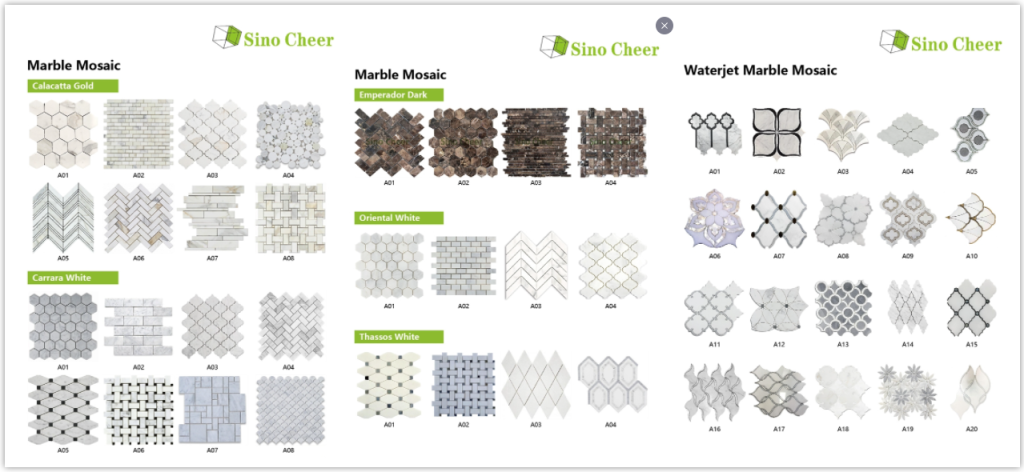
Quality Stone Mosaics—Beautiful Stone Mosaics
1. The pursuit of quality In the field of mosaics stone, there is an art of finding the perfect product among countless choices. This guide helps you pursue quality by explaining the key aspects that define excellence in quality mosaics stone.
2. High-Quality Raw Materials: The Foundation of Elegance What makes Beautiful Stone Mosaics stand out is their unwavering commitment to using high-quality raw materials. The basis of any good mosaic lies in the quality of its raw materials. Nice Mosaics Stone creates exceptional products based on the principles of cleanliness, consistency, and attractive color variation.
3. Perfect seams: a combination of precision and beauty. Seam accuracy: One of the signs of high-quality stone mosaics is a perfect seam. Whether viewed in a straight or vertical direction, each seam is the result of precise cutting, ensuring uniformity and thus enhancing the beauty of the mosaic. Alignment is extremely detailed, providing a seamless visual experience.
4. Cutting accuracy: Meticulous and meticulous Cutting accuracy: The artistry of fine mosaics stone is reflected in their cutting accuracy. Each mosaic chip is carefully crafted to ensure perfection in shape and size. The result is a symphony of seamless compositions that creates a visual masterpiece.
5. Importance of Color Mixing: Hue Harmony Color balance and integrity: Beautiful mosaics stone recognize the importance of color balance. We pay great attention to combining stone colors in a way that achieves consistency and harmony. The overall color mix is a defining feature, creating a mosaic that is not only visually appealing but also artistically coherent.
6. The final result: an elegant trio Three finishes: Beautiful stone mosaics are available in a variety of finishes: polished, honed, and tumbled. Each finish type adds a layer of character to the mosaic. The polished surface imparts sheen, the honed surface imparts a refined matte appeal, and the tumbled surface lends rounded edges a vintage appeal.
7. Uniform thickness: a sign of quality Thickness difference: Thickness uniformity is a non-negotiable standard for stone mosaics. The consistency of the mosaic thickness ensures not only a visual symphony but also that the surface reflects high-quality craftsmanship.
8. Mesh installation and glue: ensure strength and durability Mesh installation and glue: The beautiful mosaics stone gives priority to strength and durability when assembling. The grid-mounted fiberglass and glue are made of high-quality materials and provide the necessary support for each mosaic piece. This meticulous approach guarantees longevity and resilience.
9. Importance of Packaging: Keep it Elegant Importance of Packaging: The journey of exquisite stone mosaics is incomplete without professional packaging. Each mosaic product is individually packaged in beautiful cardboard and wooden boxes. This commitment ensures that the elegance of the mosaic creation is preserved until it reaches its final destination. Elevate a Space with Beautiful Stone Mosaics Simply put, beautiful mosaics stone embody the pinnacle of craftsmanship in the world of mosaics stone. From the selection of raw materials to precision cutting, color matching, finishing effects, and packaging, every step reflects the pursuit of excellent quality. Choosing a beautiful mosaic stone is more than just a choice; it’s an investment that enhances the timeless elegance of your space.
Showing elegance: the unique charm of top-quality stone mosaics (top-grade stone mosaics)
1. The essence of high-end stone mosaic Embark on a journey to explore the epitome of mosaic stone technology, taking us into the realm of high-end mosaic stone. What defines these extraordinary creations? Let’s delve into the features that elevate mosaics to the pinnacle of elegance.
2. Characteristics of high-end mosaics stone: High-end mosaics stone transcend mere aesthetics; they embody a symphony of excellence. The term "high-end" encompasses the careful selection of quality materials, commitment to color cleanliness and consistency, precise cuts, perfect seams, exquisite finishes, and an unwavering dedication to quality packaging.
3. High-quality materials are the foundation of luxury. The core of every high-end stone mosaic is the use of high-quality materials. The difference is not only in the type of stone but also in the quality, ensuring that the mosaic exudes luxury and durability. The selection process prioritizes materials that meet the highest standards of purity and elegance.
4. Color cleanliness and consistency: tone coordination The uniqueness of high-quality mosaics stone is their meticulous attention to color. Clean, consistent, and gorgeous color movement define these masterpieces. The colors are not only neatly arranged; they are carefully orchestrated to create a mesmerizing visual symphony.
5. Perfect tailoring: Precision and symmetry in production The journey to top status is inseparable from perfect tailoring. Each mosaic piece undergoes a precise cutting process that not only ensures uniformity but also symmetry, which enhances the overall design. The result is a mosaic that reflects true artisan craftsmanship.
6. Perfect seams: a combination of art and precision In the field of high-end stone mosaics, seams are more than just connections; they are an ingenious combination. A commitment to perfection ensures that seams align seamlessly, creating a canvas where each piece flows seamlessly into the next, enhancing the overall appeal of the mosaic.
7. Sophisticated Decoration: The Luxurious Trio Top-quality mosaics stone are available in three finish options: polished, honed and tumbled. Each finish type is a testament to a commitment to elegance. Polished for a glossy finish, sanded for a sophisticated matte look, and tumbled for rounded edges for vintage appeal.
8. High-quality packaging: Defending excellent quality The journey of high-quality mosaics stone is incomplete without careful packaging. Individual mosaic panels are packed in cartons and wooden boxes, ensuring that their exceptional craftsmanship is preserved until they reach their final destination.
9. Enhance the elegance of your space All in all, the charm of high-quality stone mosaic lies not only in its visual appeal but also in the meticulous craftsmanship that defines every aspect. From high-quality materials to color harmony, precise cutting, perfect seams, exquisite finishes, and premium packaging, every element makes the mosaic not only a work of art but an expression of luxury. Enhance your space with the timeless elegance of quality stone mosaics.
Cracking the code on expensive, top-quality stone mosaic and exposing its contradictory pricing structure
1. Dispelling myths about price tags
When talking about something elegant and luxurious, terms like "high-end" and "top of the line" often conjure up images of expensive goods. However, a closer look reveals a more nuanced point, which is that there may not always be a clear or direct correlation between categories and costs. Let’s bust the myth that having a sophisticated look and style only requires expensive items.
2. Understand what luxury is and look beyond the price tag
From the perspective of cost and level, there is a common misunderstanding that the price of high-end products always corresponds to their quality. Class isn’t just about price; It’s also about how well the workmanship, materials and design fit together. Understanding the price range of high-quality products is critical to navigating a complex environment without making a large financial investment.
3. The impact of skilled labor: quality over quantity
One of the most important factors in determining a product category is craftsmanship. Whether it's handmade or made in small batches, craftsmanship can have an impact on an item's value. Producing high-end products requires investing in excellent craftsmanship, even if the price isn't outrageous.
4. Materials Matter: Rigorous Examination of How Materials Work
The materials used to manufacture high-end items have a considerable impact on their price dynamics. Although richness is sometimes associated with high-quality materials, grandeur can still be maintained without incurring high costs by making smart design decisions. The balance between material cost-effectiveness and quality may help determine the ideal level of economics and complexity.
5. The impact of construction and design layout on costs:
The design of a product has an important impact on the price and quality of the product. However, by using novel technology and smart design choices, it is possible to produce a high-end product that is easy to use while maintaining its elegant appearance. It all comes down to tasteful design that exudes wealth while staying within the confines of a sensible spending plan.
6. Factors affecting price: Overview of ingredients
Although high-end products often cost more, it's important to understand the factors that determine price. The key elements are carefully designed patterns, quality materials and skilled needlework. However, companies can achieve class and affordability by carefully positioning themselves in the market and determining pricing.
7. Analyzing the myth of excessive consumerism
Just like high-end products, top-notch stuff doesn't always mean expensive. It is of ultimate quality and represents the finest craftsmanship, materials and design. By using strategic sourcing and manufacturing practices, high-quality products can be produced at reasonable prices.
8. Navigate the confusing world of pricing and courses
The intersection of cost and category is a complex maze of details that includes a wide range of factors. It's possible for high-end and premium products to be known for their superior quality without the hefty price tag. Crafting a story that removes excess perceptions and fosters an appreciation for art, materials and design in luxury goods is critical to navigating this complex market.
"Sino Cheer": The skill of fusing flawless style with stone mosaic material
1. The harmony between materials for stone mosaics and design
The combination of design and the raw elements of mosaics stone is an alchemical process in the sphere of creative creation that yields unmatched beauty. This investigation explores the subtle dance between form and substance, revealing the techniques for striking the ideal balance between design and the traditional materials used in stone mosaics.
2. Diversity in design: customized concepts for materials used in mosaics stone
The traditional material of stone mosaic has an amazing potential to connect with beautiful patterns in all of their shapes. Because of the design's adaptability, various materials may be used harmoniously to provide intriguing interactions that go beyond the conventional limits of creative expression.
3. Material-centered design approach: Astute designers craft their creative vision to accentuate and balance the intrinsic features of traditional materials, understanding that every material, including stone mosaic, has its own special attributes. The overall visual appeal is enhanced by the seamless integration ensured by this bespoke method.
4. Personalized style based on the characteristics of the stone mosaic's material
Making informed decisions is necessary to navigate the wide variety of design options. Certain patterns, particularly those containing components of mosaic stone, find their perfect match in a particular material; this is a subtle process that requires knowledge of the tactile, visual, and structural characteristics of the selected media.
5. The art of selection: coordinating materials and designs for stone mosaics
Excellent designs, such as those that use mosaic parts made of stone, don't have to stick to one particular material—rather, they break down barriers and work with both simple and elaborate materials. The transition from understated elegance to lavish grandeur highlights how flexible and thoughtful design can be.
6. From Simplicity to Extravagance: Flexible Style Charm
In the hands of talented designers, materials that are often thought of as classic and conventional go through a metamorphosis. Commonplace elements, like stone mosaics, are transformed into the remarkable via the alchemy of design, shattering stereotypes and expanding the realm of the possible.
7. Improve traditional materials, such as mosaic stone: Unlocking the Alchemy of Design
unified visual components
A meticulous synthesis of design components and material properties—especially those present in stone mosaics—is necessary to achieve the ideal fit. This oneness is profoundly rooted in sensory experience, beyond perception. The seamless fusion of sight, touch, and even sound produces a visually captivating experience.
8. Adopting stone mosaics and bridging the gap between design and materials: Synthesis of aesthetics
The pattern is expertly combined with traditional materials, including mosaic stone, to create a tapestry that is visually beautiful. When exquisite designs are thoughtfully combined with various materials, they form a monument to unbounded imagination. This investigation encourages artists and enthusiasts to embrace the limitless possibilities within this harmonic combination as it highlights the symbiotic link between design and materials.
Toward the ultimate in the artistry of stone mosaic production technology
1. Sino-Cheer stone mosaic: ultimate craft art
In the field of mosaic stone production, the pursuit of excellence transcends traditional boundaries. The ultimate in craftsmanship means a meticulous approach, with each piece becoming a canvas for exquisite craftsmanship. This exploration delves into the nuances of extreme production processes, where each tile is more than just a fragment but a testament to precision and artistry.
2. The essence of the ultimate craftsmanship in mosaic stone production
At the heart of the Ultimate Stone Mosaic production process is a commitment to precision. Each tile undergoes a rigorous selection process to ensure that only the best materials are used to create the mosaic masterpiece.
3. Careful selection: Sino Cheer’s love for products doesn’t end there.
The journey begins with a careful selection of materials, emphasizing the unique properties of the stone mosaic elements. Craftsmen carefully examine each piece and select with keen insight to ensure each tile fits the envisioned design.
4. The Art of Cutting: Redefining the Precision of Stone Mosaic Craftsmanship
The ultimate craftsmanship in the production of mosaics stone elevates cutting to an art form. Each incision is a deliberate act, a brushstroke that shapes not just the tiles but the entire mosaic’s narrative. The synergy between a craftsman's hand and cutting tools results in a seamless blend of creativity and technical prowess.
5. Tailor-made excellence:
The pursuit of ultimate craftsmanship goes beyond uniformity. Each stone mosaic is custom-cut to reflect the uniqueness of its design. The result is not just a mosaic but a narrative etched in stone, where the uniqueness of each piece contributes to the collective beauty.
6. Precision as the artistic philosophy of mosaic stone production
The ultimate craftsmanship of stone mosaic creation is more than a process; it's a philosophy. It revolves around the belief that when precision is combined with artistic intent, a mosaic becomes a work of unparalleled beauty. This philosophy transcends the studio, influencing how artisans view their craft as well as the impact it has on those who appreciate the finished masterpiece.
7. Explore the ultimate craft landscape of Sino-Cheer mosaic stone production
Stone mosaic craftsmanship becomes an exploration, a journey where tradition and innovation meet. The pursuit of excellence drives craftsmen to constantly push boundaries, constantly seeking new ways to improve the quality of each tile and redefine what is possible in stone mosaic production.
8. Sino Cheer continues to improve:
Ultimate craftsmanship is not the end, but a journey of continuous improvement. Inspired by the challenge of perfection, craftsmen continually refine their techniques, ensuring that every stone mosaic produced reflects the pinnacle of their craft.
9. The influence of extreme craftsmanship on mosaic stone art. This is the legacy of art:
The ultimate craftsmanship in the creation of mosaics stone has left an indelible mark on the artistic landscape. Each mosaic becomes a legacy, a testament to the dedication, skill and passion that go into each carefully crafted tile.
10. Manual signature:
Stone mosaics are crafted with the utmost precision and bear the unmistakable signature of the craftsman. It transcends the concept of mere production and evolves into a form of self-expression, with each tile resonating with the soul of its creator.
11. Embrace the art of ultimate stone mosaic craftsmanship
The pursuit of ultimate craftsmanship in mosaic stone production is an artistic journey. It is a testament to the commitment of artisans to transform raw materials into vivid stories. This exploration celebrates the union of technical precision and artistic intention, inviting enthusiasts to immerse themselves in a world of extreme craftsmanship and witness the birth of stone mosaic masterpieces.
Elevating the craft: the art of premium stone mosaic as a kind of living art
1. Rethink the technique of stone mosaics
In the realm of mosaics stone, the best offerings are attractive pieces of art as well as completed tiles. This investigation explores the complex realm where art and craft collide, transforming a stone mosaic into a work of living art.
2. The core of excellent mosaic stone craftsmanship:
Superior stone mosaics set off on an adventure beyond customary artistry. The selected raw materials are more than simply components; they are like the notes in a symphony, each of which adds to the overall harmony of the composition.
3. Create a picture collage:
To guarantee that every mosaic made of stones is a visual tapestry, artisans choose their materials with great care. Beyond aesthetics, each stone's distinct qualities are considered throughout the selection process, which tells a story with variations in color, texture, and pattern.
4. The meeting point of fine workmanship and stone mosaic art
Superior-quality mosaics stone combine art and workmanship. The painstaking hands that put the tiles together become artists, giving the mosaics life. It becomes a kind of creative expression and moves beyond the domain of architecture.
5. Precise artistry: In upscale mosaics stone, accuracy turns into an artistic medium. A purposeful symphony of visuals is created with each cut and placement, striking a chord with the viewer. More than simply a mosaic, the outcome is evidence of the marriage of technical mastery and creative vision.
6. The method used to create magnificent stone mosaics
Finely sculpted mosaics stone are made to order. Instead of being mass-produced, each component is manufactured specifically to add something special to the overall design. Because of this personalized method, every mosaic is a one-of-a-kind work of art.
7. Examine the creative heritage of premium mosaics stone
High-quality stone mosaics' color scheme is an emotional canvas. Every color choice, from bold tones to delicate tones, is thoughtfully chosen with the intention of evoking certain emotions and producing visual poetry.
8. Texture as story:
High-end mosaic stone has a texture that is both tactile and storytelling. Every texture is a chapter that adds to the mosaic's overall narrative. Textured finishes or smooth surfaces—touch is now an essential component of the creative story.
9. The significance of expensive stone mosaic art in culture
An exquisite mosaic stone crosses geographical borders to become a cultural storyteller. Each mosaic has creative expressions that provide windows into the diverse cultural tapestry.
10. The creative influence's legacy:
High-quality stone mosaics provide an effect that goes beyond just seeing them. They act as sparks for creative discourse, encouraging the next generation to push the limits of their profession and creative expression.
Thanks for reading the industry articles on the Sino Cheer stone mosaic series:
Stone mosaics are timeless works of art made from natural marble materials sourced from around the world, including China, Turkey, Spain, Italy, Greece and Brazil. Valued for their purity, color uniformity, hardness and natural texture movement, these basic materials are the basis for a complex creative process.
1. The artistic journey of raw materials
The adventure begins with choosing the perfect marble block—a symphony of tones and patterns that need to be changed. The blocks are carefully carved before becoming slabs, strips and tiles. This early process ensured not only the necessary form but also the constancy of color, laying the foundation for the visual coherence of the final mosaic.
2. Manufacturing precision: cutting, polishing, and assembly
Precision is at the heart of the manufacturing process. The block or strip tiles are finely carved, and each piece has clear outlines. As a result, a range of thicknesses was created to meet the various needs of mosaic design. Next comes polishing or honing, exposing the material's natural beauty and ensuring a perfect surface for the next stage. Assemblage is an exquisite artistic ballet in which polished pieces become dazzling mosaics. Each component is carefully glued in place to create a seamless and visually beautiful design.
3. Perfect packaging: ensuring safe travel
Top-quality stone mosaics are the pinnacle of craftsmanship and require packaging to match their quality. They are carefully packed in cartons or cardboard boxes to ensure safe transportation. Shrunk plastic vacuum packaging adds a touch of sophistication to each mosaic piece, keeping it in perfect condition before display.
4. The essence of high-quality stone mosaic
The fusion of high-quality materials, perfect colors, excellent cuts, perfect seams, exquisite finishes and careful packaging results in a true masterpiece. The price tag reflects not only the materials used, but also the creativity that went into every aspect of its construction.
5. Interaction of design and raw materials
These stone mosaics are characterized by a perfect fit between pattern and raw material. The creative process is accomplished by the talented hands of a team of dedicated craftsmen, each contributing their own skills to form the final story of the mosaic.
6. A testament to the beauty of craftsmanship and nature
Finally, stone mosaics are not just a commodity; they are living proof of the combination of artistry and the inherent beauty of natural materials. Clean, even colors, perfect seams and high-quality packaging reflect the company's pursuit of excellence. When these mosaics appear in various places, they convey the best of nature and are immortalized by human creativity and ability.