Introduction: Why Tumbled Marble Mosaic Tile Matters in Design & Construction
Tumbled marble mosaic tile is a timeless and versatile material that combines the natural beauty of marble with a rustic, softened surface appearance. Unlike polished marble, the material has undergone mechanical processing to produce a matte, weathered finish that has a round shape and subtle variations. This is particularly popular for design applications that require both beauty and functionality. For those involved in architecture, design, contracting, and specification, understanding the characteristics of Tumbled 대리석 모자이크 Tile is crucial to the successful completion of projects.
In this article, we'll discuss:
- The creation and procedure of mosaic stones in the bathrooms and other areas.
- Key physical and visual attributes
- Common applications and typical design use cases.
- Other benefits and drawbacks of the process compared to other coating methods.
- Technical factors (slip resistance, seal)
- Famous brands and popular examples of mosaic tile.
- The best way to install and maintain a system.
- The changing of the market and the sustainability of the project.
Definition & Manufacturing Process of Tumbled Marble Mosaic Tile
-
What is the meaning of "Tumbled"?
Tumbling is the process of utilizing a mechanical apparatus to finish marble into a variety of shapes and sizes. The apparatus is comprised of a drum that rotates and contains a medium that is abrasive (sand, small stone fragments, water, or occasionally mild acids). As the drum moves, the stones interact with each other and the abrasives, these interactions lead to a gradual transition from sharp to soft surfaces, then to an aged or weathered appearance.
Based on the procedure, marble mosaic tile that is tumbled typically has:
Rounded, softened corners instead of sharp, machine-bound ones
A matte or lightly textured coating instead of a high gloss.
Increased color, veining, and texture variation on the surface, which results in each tile having a more natural, handcrafted appearance.
-
The Way Marble Mosaic Is Drawn
According to industry sources:
Quarrying and Cutting: Large marble blocks are extracted and sized down to smaller fragments.
Crude Transformation: These pieces are roughly cut into sizes that are appropriate for Mosaic Design (for example, chips or small squares).
Tumbling: The rough-cut marbles are added to a tumbling device that contains abrasives and water. As the drum revolves, the edges are softened, and the surface's texture becomes aged and smooth.
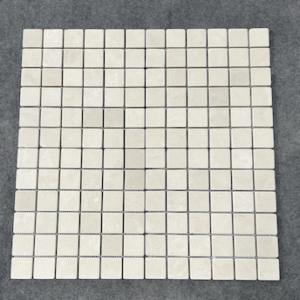
Mounting: After the fall, the tiles or chips are placed on a mesh-based sheet to create panels with a width of 12 inches and a depth of 12 inches (often 12" × 12").
Sorting and Quality Control: Tiles are evaluated for their consistency in size, color, and overall quality. On rare occasions, the manufacturer pre-seals the products, but more often, they are left unsealed for the installer to apply a seal after installation.
Characteristics & Properties of Tumbled Marble Mosaic Tile
-
Visual and Aesthetic Values
Rustic, Antique Appeal: The weathered appearance of rolled marble causes a sense of history and age, which is often utilized to create Mediterranean, Tuscan, or vintage-inspired designs.
Soft Texture: The matte finish has a different light-reception capability than the polished marble, which results in a softer, more diffuse appearance and a greater depth of surface.
Natural Variation: Because it's made of stone and has been tumbled, the variation in veining, tone, and chip size is high, so every sheet is singular.
-
Functional & Performance Benefits
Slip Resistance: The rougher surface and jagged edges can enhance the grip of these mosaics in wet areas like showers, making them a safer choice than polished marble.
Safety at the edge: Rounded corners diminish the probability of injury by sharp edges. This is particularly beneficial in areas that have people who walk without shoes.
Admissible Chip Sizes: Mosaic tiles are often sized at around 1″-4″, which allows for flexibility in design, curves, or special effects.
Porosity: Similar to the majority of marble, tumbled marble is porous and must be sealed in order to prevent staining, water, and oils.
탐블드 대리석 모자이크 타일의 응용 분야
Tumbled marble mosaic is appreciated for its combination of beauty and utility, which makes it appropriate for a variety of uses in both residential and commercial settings.
-
Bathrooms and Other Wet Spaces
Shower Floors: The textured, slip-resistant surface is ideal for use in conjunction with a shower pan.
Bathroom Walls: Mosaic sheets are easy to conform to curving walls or small spaces, they add a felt sensation, creating a sense of feel.
-
주방
Backsplashes: The aged, textured appearance is beautifully paired with island cabinets or simple design tables.
Accent Strips: Designers often employ floated mosaic as a border or inlay that contrasts with smooth field tiles.
-
Adornments and llamas
The natural diversity of tone and texture can be exploited to create striking walls.
Around the fireplaces, the softness of the edges and the organic feel of the material bring in warmth without the slickness of polished tile.
-
Architectural and Outdoor Use
In areas with low to medium traffic in the outdoors (patios, walkways), if the flooring is properly sealed, the marble will have a weathered appearance.
In architectural features like columns or wall paintings, the tumbled mosaic has a historical or rustic appearance.
Advantages & Trade-Offs Compared to Polished or Honed Marble
-
장점
Natural, Ever-lasting beauty: The aged, hand-drawn appearance conveys personality and authenticity.
Increased Safety: Increased resistance to slippage due to the textured surface.
Edge Durability: softer edges decrease the probability of chips during installation or long-term use.
Unique Variation: Because pieces are tossed around without being highly standardized, each installation has a unique, organic appearance.
Tactile Comfort: The underneath feel of things is more warming and more natural than things that are highly polished; they are therefore popular in environments that lack shoes.
-
Trade-Offs and Considerations
Porosity and Maintenance: It's necessary to keep the door open to avoid staining and water damage.
Price: Natural stone plus the process of tumbling increases the production cost; this may be more expensive than other types of stone or polished concrete.
Irregular Edges & Groutlines: Rounded edges may cause a slight misalignment of the grout or irregularity in the distribution; requires experienced installation.
Robustness: While generally long-lasting, tumbled marble is not as resistant to scratches as harder stones or glazed tiles; cleaning or mending may be more intricate.
Technical & Design Considerations
When crafting or installing a tumbled marble mosaic, professionals in the industry should consider several technical and design aspects.
-
Slip safety and rating
Ensure the surface finish is appropriate for the local code of construction regarding slip resistance; this is especially important in wet areas.
Confirm with the manufacturer that the mosaic sheet has a mesh substrate and that the slip rating is measured in either wet or dry conditions (respectively).
-
Sealing & Protection
Use a sealer that permeates to protect the marble from erosion while still preserving its original appearance.
Prepare for re-sealing: even high-end sealers may need to be re-applied every 1–3 years, depending on how frequently they are used and exposed.
Select the grout colors with care: neutral tones (ivory, warm beige) will harmonize with the aged appearance of marbled stone.
-
The Best Practices for Installation
The substrate must have sufficient stability, flatness, and preparation (particularly for flooring applications).
Use mesh-based sheets that are mounted to facilitate easier installation and consistent mortar joints.
Because of the irregular shape of the edge, there is a minor variation in the space, and the experienced masons can adjust the position during installation.
After installation, use a pH- pH-neutralizing, stone-safe cleaner to avoid negatively impacting the finish.
-
Life-span & Robustness
Marble is comprised of natural stone; you can consider it to be similar to marble in regards to cleaning, preservation, and repair.
Avoid harsh chemical cleaners that can degrade marble (like vinegar or citrus).
For installations with high traffic or exposed areas, consider combining tumbled stone with other surfaces that are more protective or limit its use to areas that have a more dramatic effect.
Popular Examples & Mosaic Tile Products
Here are several examples of tumbled marble mosaic products that demonstrate the variety and practical uses of the material:
Calacatta Gold's hexagonal small chip mosaic is called a Tumbled Calacatta Gold Hexagon Mosaic: Elegant hexagonal small-chip mosaic in Calacatta Gold that is characterized by a tumbled appearance and is ideal for luxurious backplash or focal areas.
Tumbled Carrara Mini-Brick Mosaic: A variety of Carrara marble that is small in size, non-slip, and well-suited for floors or vertical applications.
Tumbled Carrara Venato Octagon Mosaic: A traditional octagon and dot mosaic that is soft to the touch, lacks time, and is aesthetically pleasing.
Tumbled Carrara ¾-inches Square Non-Slip Shower Tile: Mosaic designed for wet areas like showers, with a non-slip surface.
Tumbled Calacatta Gold Mosaic: The herringbone pattern offers a dynamic, high-end design that is perfect for wall features.
When to Use (and When to Avoid) Tumbled Marble Mosaic?
-
Ideal Conditions
Rustic, Mediterranean, or Historical Designs: Ideal for adding personality and historical value.
Shower Floors and Wet Areas: Because of its textured surface and grip, it is safer than polished marble.
Accents: Walls, seats, hearths, or vertical panels that are both tactile and visual in their design.
Outdoor or Transitional Spaces: Stone type and rating determine if it will work in low-traffic patios or yards (if sealed properly).
-
Less Popular Utilities
Extremely Minimalist or Modern: Where flat, glossy surfaces are favored.
High-Stain Areas: If the seal is not strong, marble can be stained; for areas that are heavily used, kitchens that are commercialized, or public areas, porcelain is more likely to be safe.
Heavy traffic flooring (without regular care): Natural marble may become either dull or discolored over the course of time if care is not taken.
Areas Without Capacity for Sealing: If the process of sealing is not practical or too costly, alternatives that are polished or glazed may be more viable.
Maintenance, Care & Longevity
-
Sealing Strategy
Use a stone sealer of high quality following the installation of the stone to reduce the absorption of water and staining.
Re-seal the product periodically based on the amount of wear and exposure (for example, every year or every two years in bathrooms).
After the grouting process, thoroughly clean the area, then seal the area to preserve the grout's lines and stone.
-
Cleaning Ideas
Use pH-appropriate cleaners that are explicitly designed for natural stone.
Avoid harsh or acidic cleaners; these types of cleansers can degrade the marble's texture and dull the surface that is tumbled.
Rinse the area thoroughly after cleaning and dry it with a soft microfiber-type cloth to prevent water stains or grout buildup.
-
Repair and Restoration
Chips and fissures can be covered with epoxy or stone filler that matches the color of the cracks.
If the finish is too damaged, a professional may repair or renew it, but typically, it's simple to maintain it: simply cleaning and resealing.
For areas that wear very badly, consider doing periodic evaluations and touch-ups that will preserve the tile's appearance.
Market Trends & Sustainability
-
Increasing demand for Natural, Crude Stone
Designs today are increasingly concerned with genuine, physical surfaces over ornate surfaces. Marbled mosaic that is hand-made, time-worn, and lacks the artificial or engineered features.
-
Sustainable Acquisition
Many manufacturers take care to source natural marble responsibly, and the tumbled finish can utilize off-cut or reclaimed stone, which reduces waste.
Additionally, because the tumbled stone is less concerned with a high-end presentation and instead focuses on the organic nature of the stone, it is in harmony with the sustainable design philosophy.
-
Innovation in Product Creation
More brands are releasing new mesh-based patterns and colors in custom configurations.
Advances in the field of tumbling have allowed for more precise and controlled terminations - a balance between uniformity and texture.
Integrated quality control and digital ordering tools facilitate the selection of consistent batches across projects.
결론
Marbled mosaic stone slabs intersect with the intersection of fashion, efficiency, and atemporality. For designers and specifiers who want a natural stone finish that feels both aged and refined, this material offers a strong option. It imbues real architectural importance without the luxury of polished stone, while providing slip resistance, warmth, and texture. With proper installation and care, a tumbled marble mosaic can imbue applications that are both long-lasting and dramatic, from bathrooms to feature walls, from residential retreats to boutique commercial spaces.